Search for a rolling shutter in Delhi and you will see dozens of names, all claiming to be “manufacturers.” Some are. Many are traders, dealers or contractors who buy a ready shutter from someone else and add their own margin.
There is nothing illegal about that. But it changes what you pay, who you can hold responsible, and what happens when something goes wrong a year later.
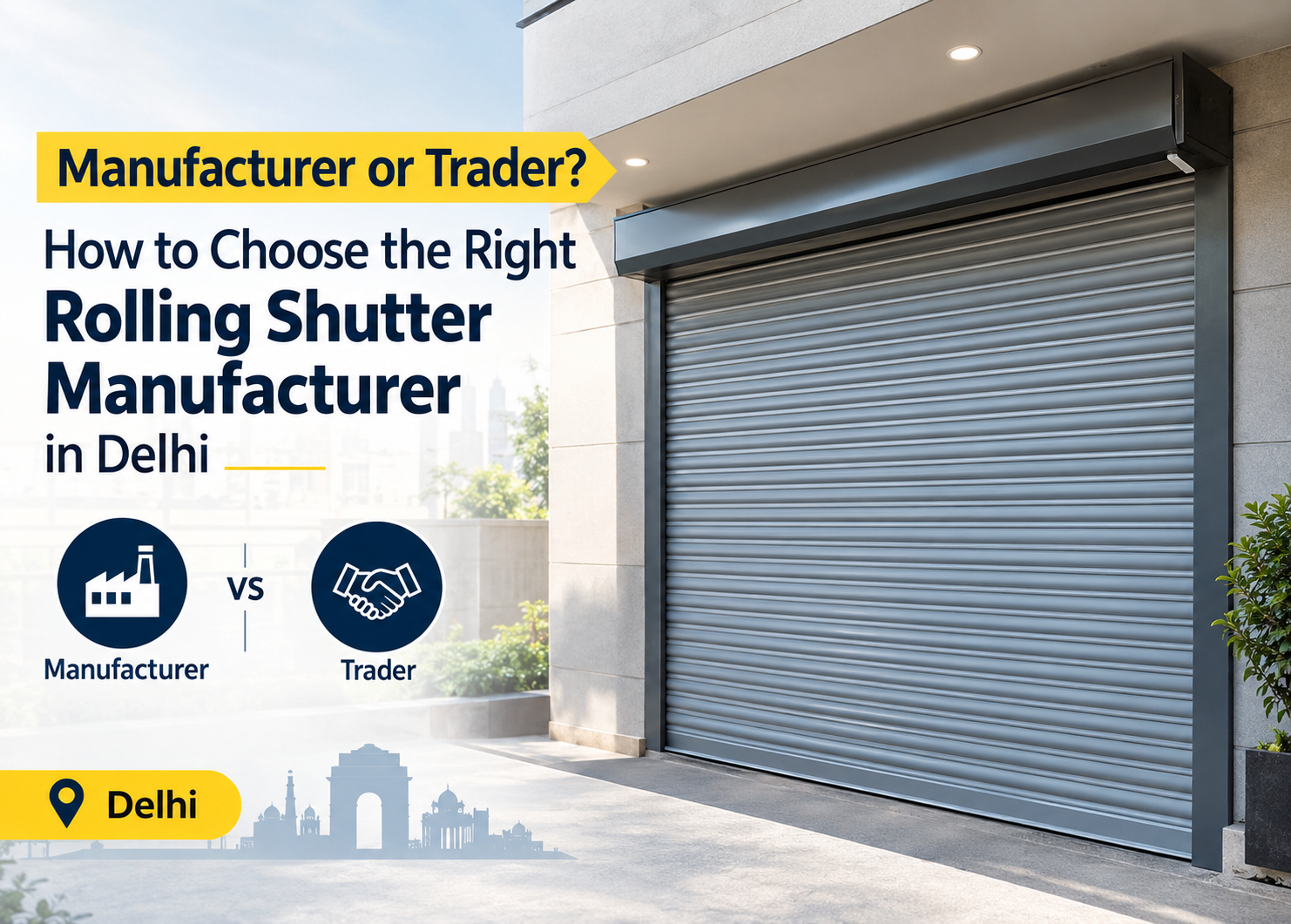
So before you compare prices, it helps to know who you are actually dealing with. This guide explains how to tell a genuine Rolling Shutter manufacturer in Delhi from a middleman, and why the difference matters more than most buyers expect.
Why this question matters at all
A rolling shutter looks simple from the outside. Inside, it is a set of parts: slats, guide channels, a drum, springs, a lock and, in some cases, a motor. Each part has to be matched to the opening.
When one company measures, fabricates and installs, the responsibility sits in one place. When the order passes through two or three hands, a small error in measurement or a vague instruction can travel all the way to the final product. By then nobody wants to own it.
That is the real value of dealing directly with a manufacturer. It isn’t only about price. It is about accountability.
6 signs you are talking to a real manufacturer
1. They can explain how the shutter is made.
A manufacturer can talk about slat profiles, thickness, rolling mechanisms and finishing without reading from a brochure. Ask a simple question such as “why this thickness for my opening?” The answer tells you a lot.
2. They are comfortable with a factory or workshop visit.
A genuine unit has nothing to hide. If someone avoids showing you where the work happens, take note.
3. They offer more than one material and explain the trade-offs.
A real rolling shutter manufacturer in India typically works with MS, GI, stainless steel and aluminium, and will tell you honestly which suits your use. A trader usually pushes whatever is in stock.
4. They quote for your opening, not a standard size.
Custom sizing is normal for a manufacturer. If every quotation looks the same regardless of your measurements, it may be a catalogue sale.
5. They have a verifiable track record.
Look for a company history, a registered address, a GST number and work you can actually see. Rama Rolling Shutter Industries, part of the CL Group, has been operating since 1956 from Rani Jhansi Road, New Delhi, with its GSTIN displayed openly on the website.
6. They talk about after-sales without being asked.
Spare parts, adjustments and repairs matter in year three, not just on installation day.
How to read a rolling shutter quotation
This is where many buyers lose money without realising it. A single bottom-line figure tells you almost nothing. A proper quotation should break down:
- Size and quantity of each shutter, in the exact dimensions measured.
- Material and thickness, stated clearly (for example MS, GI or stainless steel).
- Finish, whether painted, powder-coated or natural.
- Operation type, whether manual, gear-operated or motorized, along with the motor specification if applicable.
- Lock and accessories, because these are often left out of cheaper quotes.
- Installation, whether it is included, and what the site work covers.
- Delivery time and payment terms.
Put two quotations side by side and compare line by line. A quote that is 15% cheaper often turns out to use a thinner slat or leave out the lock and installation.
What really affects the price
People often ask for a “rate per square foot,” and it is a fair question. But the number can mislead, because the final cost depends on several things working together:
- Opening size. Larger openings need stronger components, not just more metal.
- Material. Stainless steel and aluminium cost differently from MS or GI.
- Slat thickness and profile. This affects strength and weight.
- Operating system. A motorized rolling shutter costs more upfront than a manual one, but may save daily effort on larger or busy entrances.
- Finish and extras. Special colours, vision panels or added security features change the price.
A manufacturer who works factory-direct can usually be more flexible on these choices, since nothing needs to be negotiated through a middle layer.
From enquiry to handover: what a good process looks like
It helps to know the normal sequence so you can spot gaps.
- Enquiry and requirement discussion. What is the space, how often will it be used, and what security level is needed?
- Site visit and measurement. Taken at the actual opening, not estimated from a photo.
- Quotation. Itemised and written, as described above.
- Fabrication. Built to the confirmed dimensions.
- Installation. Guides fixed true, springs balanced, finish checked.
- Handover. You are shown how to operate and lock the shutter, and you know who to call if something needs adjustment.
If a company skips the site visit or can’t explain steps 4 and 5, that is a warning sign.
When a trader is still a reasonable choice
To be fair, a trader or dealer is not always the wrong answer. For a very small, standard opening with no special requirements, a ready-made shutter from a reliable local dealer can be quick and cheap enough.
But for anything custom, wide, heavy-use, motorized or part of a larger project, dealing directly with the manufacturer usually saves time, reduces mistakes and gives you someone clearly accountable.
Beyond shutters: one supplier for the whole entrance
Many properties need more than a single product. A shop may want a rolling shutter plus a rolling grill for display visibility. A factory may need shutters along with sliding gates and a fire door for specific areas. Working with one manufacturer that makes all of these keeps the design, finish and installation consistent.
Why experience is worth checking
Experience shows up in small things: how quickly a company spots a measurement problem, how clearly it explains the options, and how it handles complaints. Rama Rolling Shutters has supplied shutters, gates and grills to shops, factories and institutions for decades, with clients including Hyundai, TATA Chemicals, DPS School and Pizza Hut. You can read more about the company on our About page.
Frequently Asked Questions
1. How do I know if a company is a real rolling shutter manufacturer?
Ask to visit the workshop, ask how the shutter is fabricated, and check for a registered address and GST number. A real manufacturer will welcome all three.
2. Is buying directly from a manufacturer cheaper?
Often it is, because there is no middle margin. More importantly, the quotation is usually clearer and easier to customise.
3. Can a manufacturer in Delhi supply outside the city?
Yes. Many manufacturers, including Rama Rolling Shutters, serve Delhi NCR and clients across India.
4. What should be included in a rolling shutter quotation?
Size, material, thickness, finish, operation type, lock, installation, delivery time and payment terms, all written out.
5. Should I choose manual or motorized?
That depends on the size of the opening and how often it is used. A manufacturer should explain both options honestly and not push the costlier one.
Get a clear, itemised quotation
If you are planning a new shutter or replacing an old one, Rama Rolling Shutters can visit your site, take measurements and give you a written breakdown so you know exactly what you are paying for.