A shop owner needs a shutter that protects valuable stock after closing time. A warehouse manager needs a strong entrance that can handle frequent movement. A factory requires an entrance system that supports daily operations without unnecessary delays.
Although these requirements are different, they have one thing in common: the need for a reliable rolling shutter.
Rolling shutters have become an important part of India’s commercial, industrial and infrastructure development. From small retail outlets and shopping complexes to manufacturing plants and logistics warehouses, they provide a practical combination of security, space efficiency and convenient access.
However, selecting the right shutter involves more than choosing a design or comparing prices. Material quality, shutter construction, slat thickness, operating mechanism, entrance dimensions and installation all influence its performance.
If you are searching for a Rolling Shutter manufacturer in India, understanding these factors will help you make a more informed decision.
1. Understanding the Working Mechanism of a Rolling Shutter
A rolling shutter is a vertically operated entrance system made from interconnected metal slats or specially designed profiles. These sections move through two vertical guide channels and roll around a barrel assembly installed above the entrance.
The system operates through a relatively simple mechanical arrangement.
When the shutter opens, the curtain moves upwards and collects around the barrel. When it closes, the curtain moves downwards through the guide channels until it covers the entrance.
A standard rolling shutter system generally consists of the following components:
- Shutter Curtain: The interconnected slats that form the main protective surface.
- Guide Channels: Vertical channels that control the movement and alignment of the shutter.
- Barrel Assembly: The rotating component around which the shutter curtain rolls.
- Spring Mechanism: Helps balance the shutter during manual operation.
- Motor System: Provides powered operation in motorized configurations.
- Bottom Rail: Forms the lower edge of the shutter and supports its closing position.
- Locking System: Helps secure the entrance when the shutter is closed.
Each component has a specific function. Poor alignment, unsuitable components or incorrect installation can affect the overall movement and operating life of the shutter.
2. Different Types of Rolling Shutters and Their Applications
Not every building requires the same type of shutter. A retail shop, an industrial warehouse and an automobile showroom have different entrance requirements.
Understanding the available options makes the selection process easier.
A. MS Rolling Shutters
Mild steel rolling shutters are widely used in commercial and industrial applications. Their strength makes them suitable for shops, factories, workshops and warehouses.
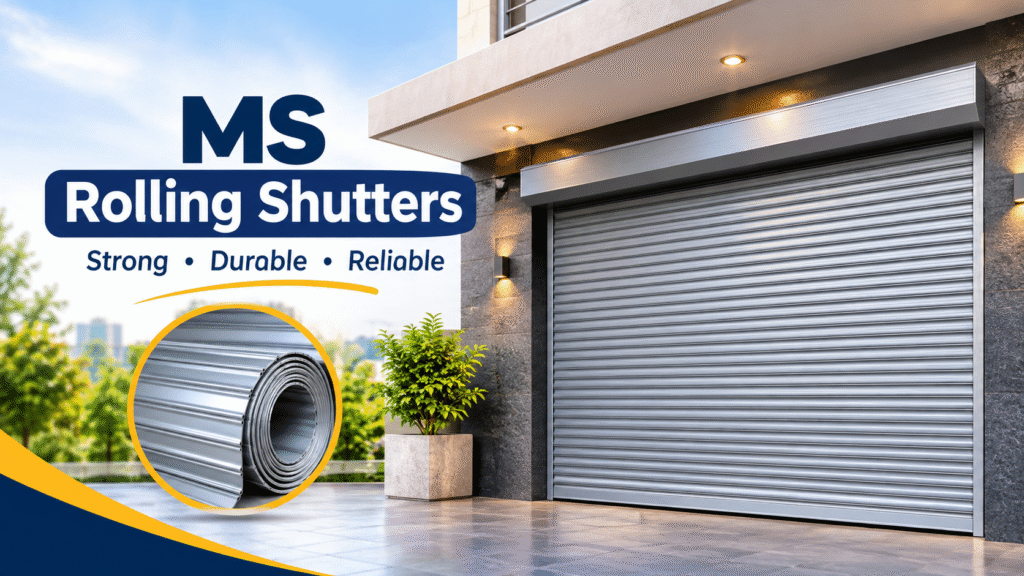
They can be manufactured in different configurations depending on entrance dimensions and security requirements.
Best suited for: Commercial shops, industrial buildings, workshops and storage facilities.
B. GI Rolling Shutters
Galvanized iron rolling shutters are manufactured using steel with a protective zinc coating. This coating helps protect the underlying metal against corrosion.
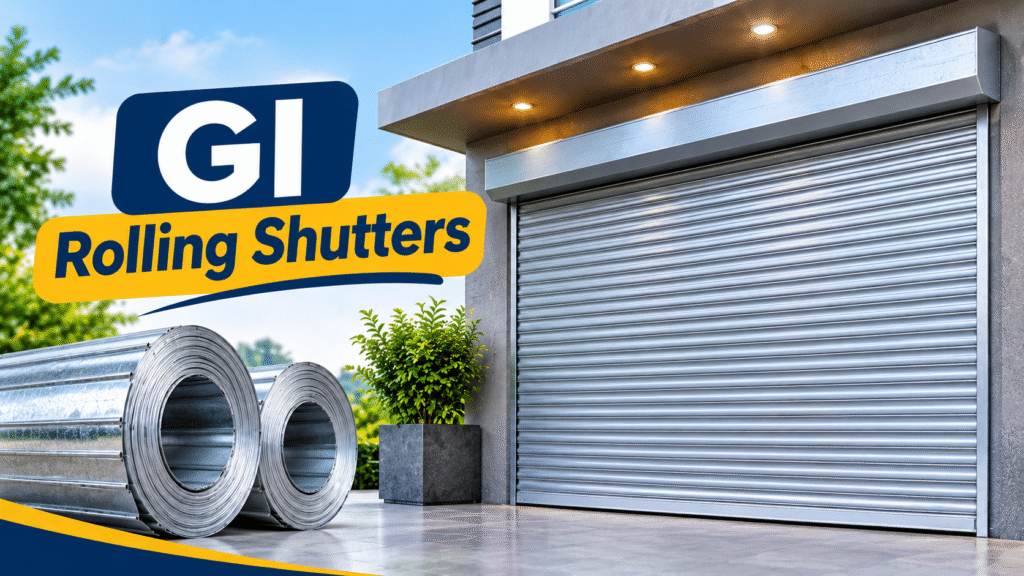
They are considered for applications where durability and protection against environmental exposure are important.
Best suited for: Commercial buildings, warehouses, shops and industrial premises.
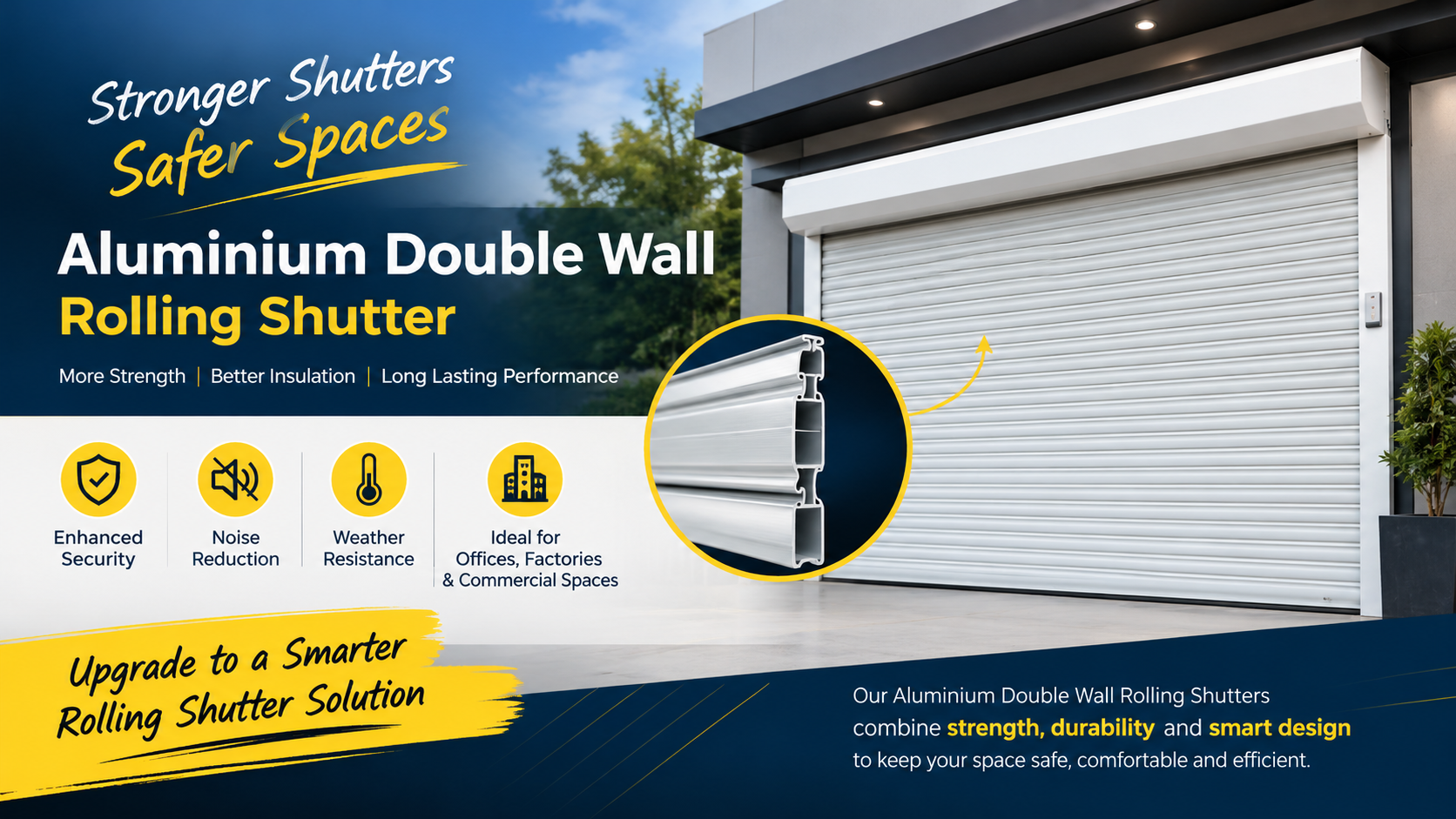
C. Aluminium Rolling Shutters
Aluminium shutters are lighter than many conventional steel shutter configurations. They are useful where reduced weight and an attractive appearance are important considerations.
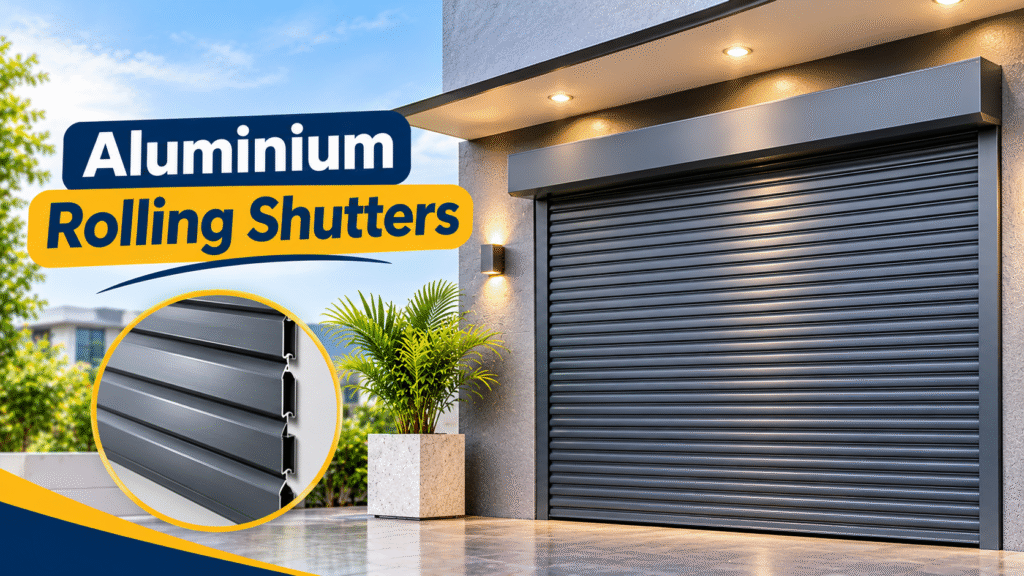
The specific profile and construction should be selected according to the entrance and operating requirements.
Best suited for: Showrooms, commercial properties and selected retail applications.
D. Stainless Steel Rolling Shutters
Stainless steel shutters are considered for applications where appearance, corrosion resistance and durability are priorities.
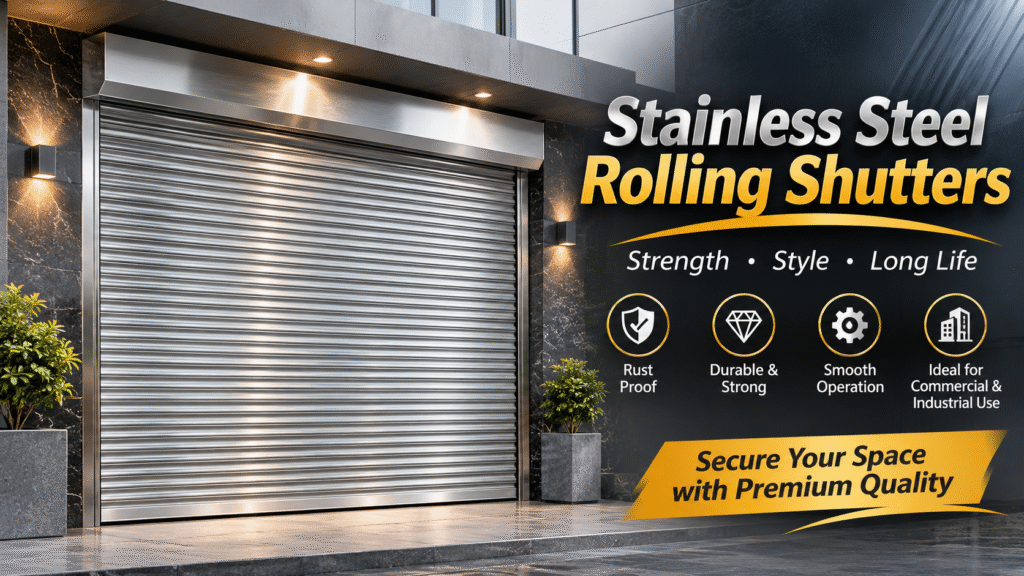
The appropriate stainless steel grade should be selected according to the operating environment.
Best suited for: Selected commercial and specialised industrial applications.
E. Motorized Rolling Shutters
Motorized rolling shutters use an electric motor to open and close the shutter. They reduce the need for manual handling and are particularly useful at entrances that are operated frequently.
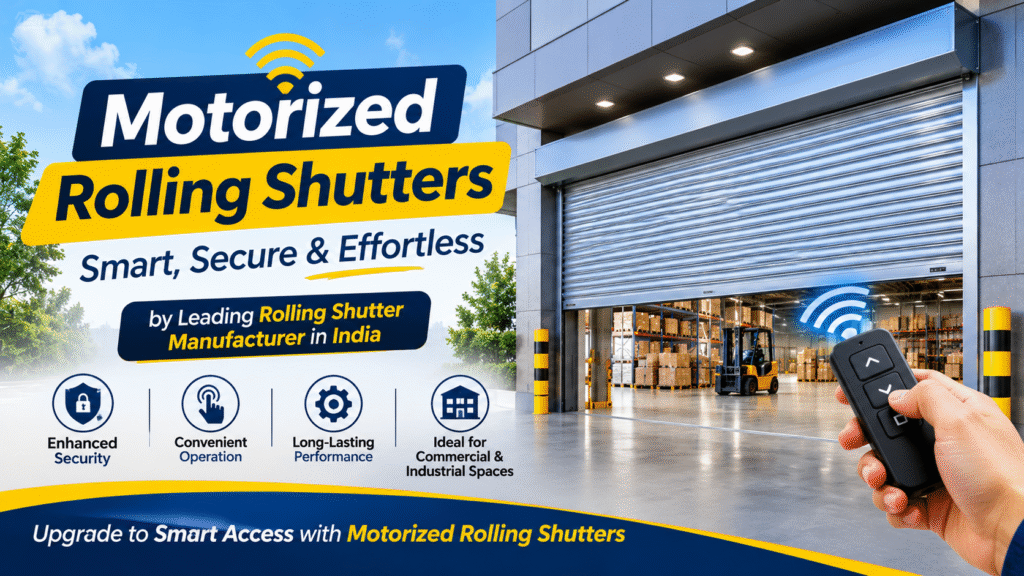
Motor capacity should be selected according to shutter dimensions, weight and operating frequency.
Best suited for: Large shops, factories, warehouses, commercial complexes and industrial entrances.
3. How to Choose the Right Rolling Shutter Material?
Material selection is one of the most important decisions when purchasing a rolling shutter.
A common mistake is selecting a material simply because it is popular or inexpensive. In reality, the correct choice depends on the location, environmental conditions, frequency of operation and security requirements.
Consider these factors before making a decision:
| Selection factor | What should you consider? |
|---|---|
| Strength | Required level of physical protection |
| Weight | Shutter size and operating mechanism |
| Corrosion resistance | Moisture and environmental exposure |
| Appearance | Building design and finishing requirements |
| Maintenance | Cleaning, inspection and servicing |
| Budget | Initial cost and long-term operating expenses |
For example, a busy warehouse may require a different shutter configuration from a small retail shop. Similarly, an entrance exposed to moisture may need more attention to corrosion protection.
The best solution is the one that matches the actual application rather than simply choosing the most expensive material.
4. Manual vs Motorized Rolling Shutters: Understanding the Difference
One of the most common questions buyers ask is whether they should choose a manual or motorized rolling shutter.
Both systems have their own advantages.
Manual Rolling Shutters
Manual shutters operate through a hand-operated mechanism. Depending on their design and size, they may use springs or other balancing arrangements to support operation.
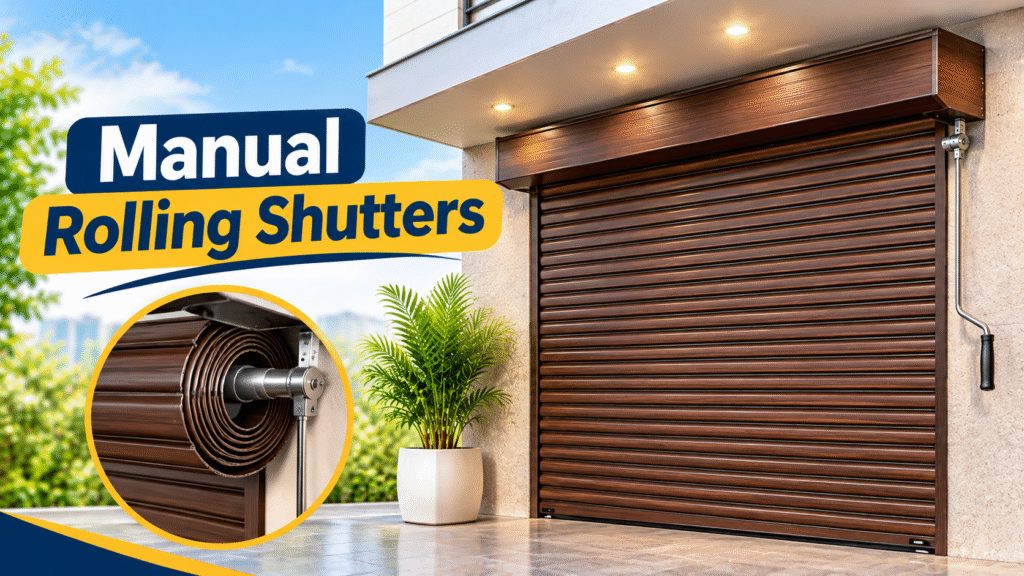
Advantages include:
- No electricity required for normal operation.
- A relatively straightforward operating arrangement.
- Suitable for many conventional shop entrances.
- Generally lower initial investment than motorized alternatives.
Motorized Rolling Shutters
Motorized shutters use an electric motor to operate the curtain. Depending on the system, they may be controlled using switches, remote controls or other operating devices.
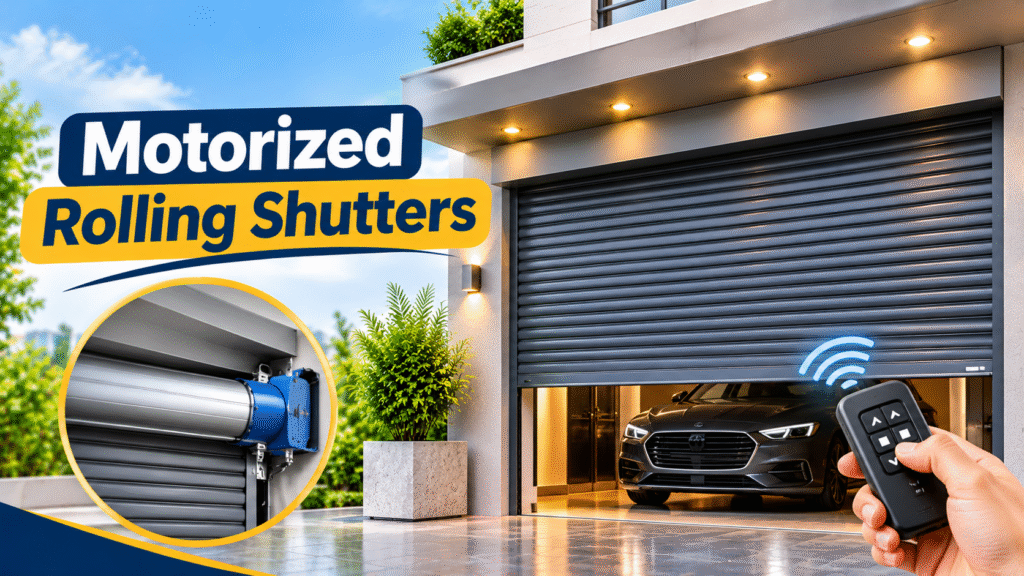
Advantages include:
- Convenient opening and closing.
- Reduced manual effort.
- Useful for larger shutter installations.
- Suitable for entrances with frequent daily operation.
- Can be integrated with appropriate access-control systems.
Which one should you choose?
For a smaller shop with limited daily movement, a manual shutter may be sufficient. For a large industrial entrance or a location where the shutter opens and closes repeatedly, a motorized system may offer greater convenience.
The decision should consider the shutter’s weight, dimensions, operating frequency, available electrical supply and maintenance requirements.
5. Important Technical Factors Buyers Should Never Ignore
Two rolling shutters may look similar but perform differently because of their construction and specifications.
Before finalising an order, pay attention to these technical details.
Shutter Slat Thickness and Profile
Slat thickness is an important specification because it influences the construction and mechanical properties of the shutter curtain.
However, thickness should not be considered independently. The profile design, material grade, shutter dimensions and intended application also matter.
Ask the manufacturer for the actual material and profile specifications rather than relying only on general descriptions such as heavy-duty or premium quality.
Guide Channel Design
Guide channels control the vertical movement of the shutter curtain. Their dimensions, alignment and fixing arrangements influence how smoothly the shutter operates.
Incorrect installation can cause friction, uneven movement and unnecessary wear.
Barrel and Spring Arrangement
The barrel and balancing mechanism support the movement of the shutter. Their specifications should be appropriate for the curtain’s weight and dimensions.
An unsuitable balancing arrangement can make manual operation difficult and place additional stress on components.
Motor Capacity
For motorized shutters, motor selection is particularly important.
A motor should be compatible with the shutter’s weight, size and expected operating frequency. Overlooking these requirements can result in operational problems.
Safety and Locking Arrangements
Depending on the application, buyers may need suitable locking systems, emergency operating provisions, safety devices and access controls.
These requirements should be discussed before manufacturing and installation.
6. Common Rolling Shutter Problems and How to Prevent Them
Like any frequently used mechanical system, rolling shutters require proper maintenance.
Understanding common problems can help property owners identify issues before they become expensive repairs.
Problem 1: Unusual Noise During Operation
Possible reasons include friction, misalignment, worn components or insufficient lubrication at suitable moving points.
Prevention: Arrange periodic inspection and follow the manufacturer’s maintenance recommendations.
Problem 2: Shutter Getting Stuck
A shutter may become difficult to operate because of obstructions, damaged slats, guide-channel problems or mechanical issues.
Prevention: Keep guide channels clean and avoid forcing a shutter that is stuck.
Problem 3: Uneven Movement
Uneven movement can indicate alignment or balancing problems.
Prevention: Ensure correct installation and arrange professional inspection when movement becomes irregular.
Problem 4: Rust and Surface Damage
Metal shutters exposed to moisture and harsh environmental conditions may develop corrosion if their protective finish is damaged.
Prevention: Inspect the surface periodically and arrange appropriate protective treatment when required.
Problem 5: Motorized Shutter Malfunction
Electrical faults, control issues, unsuitable motor capacity or mechanical resistance may affect motorized operation.
Prevention: Use compatible motor systems and arrange servicing by qualified technicians.
Regular maintenance does not eliminate every possible problem, but it helps identify wear and operational issues at an early stage.
7. Why Are Rolling Shutters Used Across Different Industries?
Rolling shutters are not limited to shop entrances. Their adaptable construction makes them useful in several sectors.
Retail and Shopping Complexes: Individual shops require secure entrances that can be opened during business hours and closed after operations.
Warehousing and Logistics: Warehouses need practical entrance systems for storage areas and movement of goods.
Manufacturing Facilities: Factories require shutters suited to their entrance dimensions, operating frequency and industrial environment.
Automobile Workshops: Wider entrances can accommodate vehicle movement and provide access to service areas.
Educational Institutions: Selected utility areas and storage spaces may use rolling shutters for controlled access.
Commercial Buildings: Shops, offices, showrooms and other commercial properties use different shutter configurations according to their needs.
This wide range of applications explains why customised manufacturing is an important consideration when selecting a shutter.
8. What Should You Check Before Selecting a Rolling Shutter Manufacturer in India?
Choosing the manufacturer is just as important as choosing the shutter itself.
A manufacturer should be able to understand the application and recommend suitable specifications instead of offering the same configuration for every entrance.
Here are seven things worth checking:
- Manufacturing Experience: Look for relevant industry experience and an established manufacturing background.
- Product Range: Check whether the manufacturer offers different shutter types and related entrance solutions.
- Material Specifications: Understand the materials, thicknesses, profiles and finishes being offered.
- Customisation: Confirm whether the shutter can be manufactured according to your entrance measurements.
- Operating Options: Ask about manual and motorized configurations.
- Installation Support: Discuss measurements, fitting and alignment before placing an order.
- After-Sales Assistance: Understand the available maintenance and servicing support.
A transparent discussion about these points can help avoid confusion and unexpected expenses later.
9. Rama Rolling Shutter Manufacturers in India: Manufacturing Experience Since 1956
When evaluating shutter manufacturers, experience, product variety and the ability to understand different customer requirements are important considerations.
Rama rolling shutter manufacturers in India have manufacturing experience dating back to 1956, offering entrance and security solutions for commercial, industrial and residential applications.
The product range includes:
- Rolling Shutters
- Rolling Grills
- Collapsible Gates
- Sliding Gates
- Swing Gates
- Fire Doors
- Hose Cabinet Doors
- Motorized Sliding Doors
Different solutions are available in materials such as mild steel, galvanized iron, stainless steel and aluminium, depending on the product and application.
Customers can explore manual and motorized options as well as customised configurations based on entrance dimensions and operating requirements.
For example, a retail shop may require a conventional rolling shutter, while an industrial property may need a motorized entrance system. Similarly, a showroom may have different appearance and access requirements from a warehouse.
Understanding these differences is essential when selecting the right product.
Rather than choosing a shutter based only on price, customers should compare its construction, material specifications, operating mechanism and suitability for the intended location.
To explore available products and solutions, visit: Rama Shutter.
10. How to Estimate the Requirements for a Rolling Shutter?
Before requesting a quotation, it is helpful to collect a few basic details.
| Requirement | Information to prepare |
|---|---|
| Entrance width | Actual opening width |
| Entrance height | Actual opening height |
| Location | Shop, factory, warehouse or showroom |
| Material | MS, GI, aluminium or stainless steel |
| Operation | Manual or motorized |
| Usage | Occasional or frequent |
| Additional requirements | Locking, automation and finishing |
Why is this information important?
Because rolling shutter pricing depends on several variables, including material, dimensions, specifications, operating mechanism, installation and transportation.
A quotation based only on an approximate shutter size may not represent the final project cost.
Providing accurate measurements and application details allows the manufacturer to understand the requirement more clearly.
11. Frequently Asked Questions About Rolling Shutters
Q1. Which rolling shutter is best for shops in India?
MS and GI rolling shutters are commonly considered for retail shops. The appropriate choice depends on the required security, entrance dimensions, material specifications and budget.
Q2. What is the difference between an MS and GI rolling shutter?
MS refers to mild steel, while GI refers to galvanized iron or galvanized steel. GI has a zinc protective coating that helps improve corrosion resistance compared with uncoated steel, depending on the coating and environment.
Q3. Are motorized rolling shutters suitable for warehouses?
Yes. Motorized rolling shutters can be useful for warehouses with large entrances and frequent opening and closing requirements. Motor capacity and safety arrangements should be selected according to the application.
Q4. Can rolling shutters be made according to custom measurements?
Yes. Rolling shutters can be manufactured according to specific entrance dimensions and operating requirements, subject to the manufacturer’s product capabilities.
Q5. What factors affect rolling shutter prices in India?
Material, thickness, shutter dimensions, profile design, operating mechanism, finishing, installation and transportation can all influence the final price.
Q6. How often should a rolling shutter be serviced?
Service frequency depends on operating conditions and manufacturer recommendations. Shutters used frequently in industrial environments may require more regular inspection than those used occasionally.
Q7. How can I find a reliable Rolling Shutter manufacturer in India?
Compare manufacturing experience, material quality, product specifications, customisation, installation arrangements and after-sales support. Request a detailed quotation before finalising your manufacturer.
Conclusion: Choose a Rolling Shutter Based on Performance, Not Just Appearance
A rolling shutter is an important investment for the security and daily functioning of a commercial or industrial property. Its performance depends on much more than the metal used in its construction.
From slat profiles and guide channels to motor capacity and installation, every component contributes to the final result.
Understanding these details helps buyers avoid unsuitable configurations and select a shutter that meets their actual requirements.
If you are researching a Rolling Shutter manufacturer in India, compare the available solutions carefully and prioritise suitable specifications, manufacturing experience and long-term usability.
Explore the range of products offered by Rama Rolling Shutter:
Website: https://ramashutter.net/
Product Range: https://ramashutter.net/rolling-shutter/
For Product Enquiries:
Sahil Malhotra: +91 9811929555
Indresh Malhotra: +91 9811110844